Customer log-in

Sunset Strategy: Choosing the Right IoT Connectivity for 2026 and Beyond

The 2G and 3G network shutdown is no longer a single cliff event. It is a fragmented, multi-year transition shaped by regional shutdown timelines, uneven roaming maturity, firmware behavior, and long device lifecycles.

This guide helps you understand the hidden risks and choose an IoT connectivity strategy that can support global deployments over the next decade.

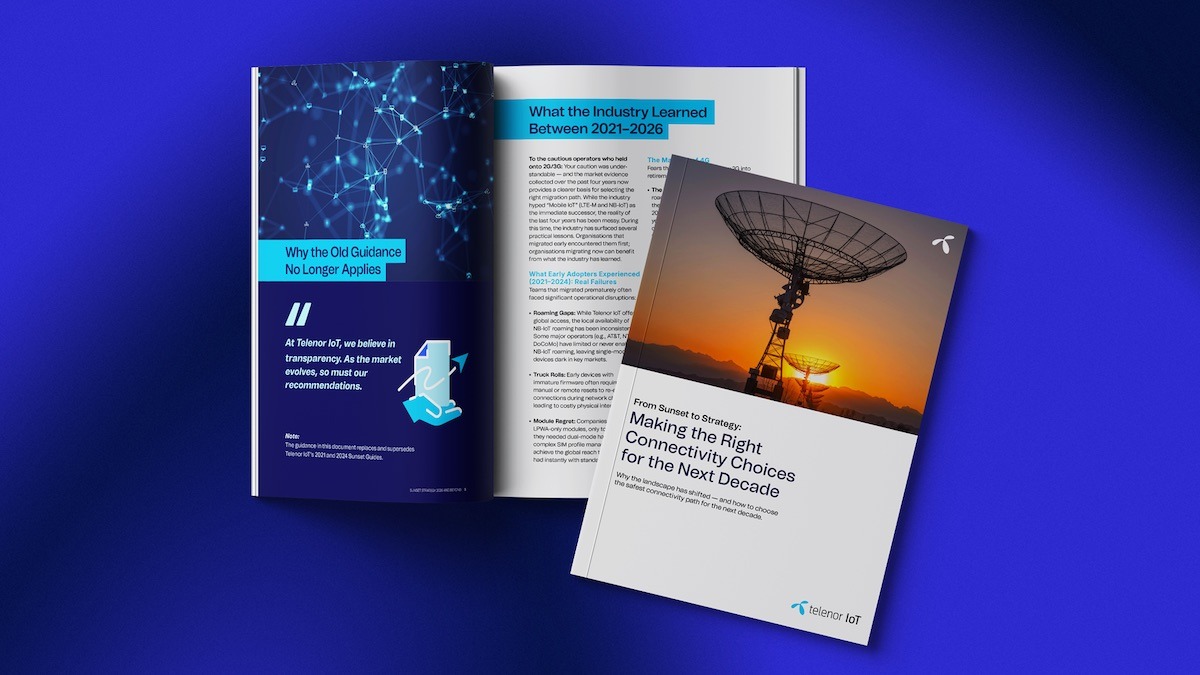
Sunset Strategy Guide

Understand why IoT connectivity guidance has shifted for 2026, where LTE Cat-1/Cat-1 bis fits, and how to avoid hidden risks in global 2G/3G migration planning.

The road from 2G and 3G to the next generation of IoT connectivity is not a straight line. Enterprises are navigating a mixed landscape of 4G LTE, LTE-M, NB-IoT, emerging 5G RedCap, and Non-Terrestrial Networks (NTN), each with different trade-offs in coverage, cost, power consumption, roaming, and long-term reliability.

This guide is designed for companies planning around 2G and 3G shutdowns and reassessing their connectivity choices for global IoT deployments. It reflects what the market has learned between 2021 and 2026, including why LTE Cat-1 and Cat-1 bis have become strong default options for many international fleets, where LTE-M and NB-IoT still fit, and why 5G RedCap remains a future consideration rather than a universal near-term replacement.


In This Guide

  • The “Safe Harbor” strategy: Why 4G LTE Cat-1 and Cat-1 bis have emerged as lower-risk baseline options for many global IoT fleets, and how to avoid failure scenarios such as the “Death Loop”
  • A reality check on 5G RedCap: What is ready today, what is not, and why 5G Standalone maturity matters more than headline timelines
  • Where NTN fits: Why satellite connectivity should be treated as a complementary layer for remote assets and coverage gaps, not a full replacement for terrestrial networks
  • A 2026 decision framework: How to compare LTE Cat-1, LTE-M, NB-IoT, 5G RedCap, and NTN against roaming, mobility, indoor coverage, throughput, battery life, and long-term availability

Make the Right Call for the Next Decade

Planning for 2G and 3G shutdowns? Start here.

Many IoT strategies were built for a simpler connectivity landscape. This guide helps you reassess those assumptions and choose a safer path for global, long-life deployments before complexity turns into operational risk.

Explore Related Solutions

Managed IoT Connectivity

IoT Connect

Managed IoT connectivity for enterprises operating across markets and large-scale deployments, with operational oversight and lifecycle support built in.

Explore managed IoT connectivity
Automotive IoT Connectivity

IoT Drive

Global vehicle connectivity with built-in compliance and support for software-defined vehicles, helping car manufacturers deliver connected services at scale.

Explore automotive IoT connectivity
Integrated IoT Connectivity

IoT Complete

Devices, SIMs, and data management in one service, supporting connected products from launch to scale without building your own IoT stack.

Explore integrated IoT connectivity