
Connectivity Technologies for IoT: Making the Right Choice for Today and Tomorrow
On Demand
Managed Connectivity Services
FEATURES & CAPABILITIES
IoT Connectivity Platform IoT Roaming Roaming Selection Tool Global Connectivity Global IoT SIMs Data Analytics & AI Security in IoTThe IoT connectivity landscape is full of competing technologies, rollout promises, and shifting network timelines. For enterprises deploying connected products across markets, the real question is not which technology sounds most advanced. It is which connectivity option can support the use case, coverage needs, device lifecycle, roaming requirements, and migration risks in the real world.
This guide, produced by Telenor IoT in collaboration with Analysys Mason, gives a practical overview of cellular IoT connectivity technologies and how they fit into enterprise IoT planning. It covers established options such as LTE Cat-1, LTE-M, NB-IoT, and LTE Cat-4, as well as emerging technologies such as 5G RedCap and satellite-based IoT.
Use the guide to understand what is widely available today, what is still dependent on network rollout, and how to plan connectivity choices for long-life IoT deployments with fewer surprises.
Choosing an IoT connectivity technology is not only a technical decision. It affects device design, regional availability, roaming, battery life, operational resilience, migration timing, and total deployment complexity.
The guide helps enterprises assess which technologies are best suited for different IoT requirements, including low-power sensing, smart metering, asset tracking, connected vehicles, industrial automation, video surveillance, smart agriculture, wearables, and emergency response.
It also gives practical guidance for organizations that need to replace 2G or 3G devices, scale existing 4G deployments, or evaluate whether emerging technologies such as 5G RedCap and NTN are ready for their use case.
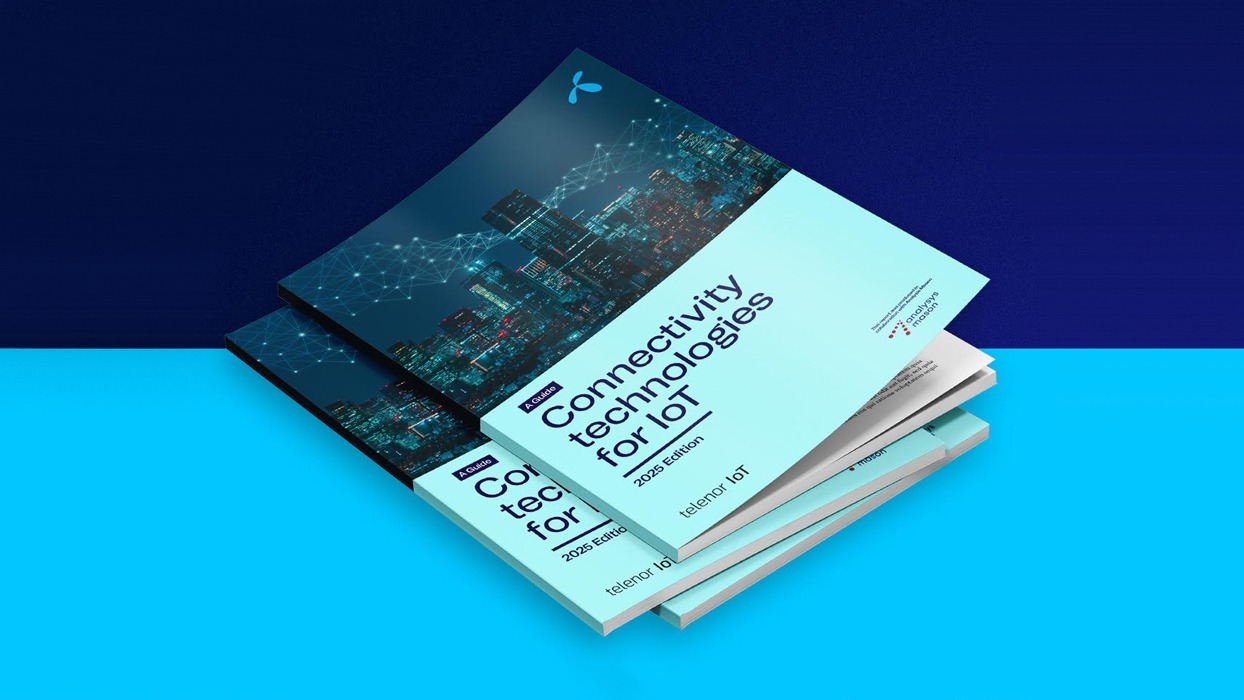
Download your copy to gain a grounded, strategic overview of today’s cellular IoT connectivity landscape — and how to prepare for tomorrow.
Our recommendation is simple: prioritize technologies that are already deployed and proven in your target markets. By aligning connectivity choices with actual business needs — not hype — companies can avoid unnecessary complexity and build robust, future-ready IoT solutions.

For many enterprise IoT deployments, 4G remains one of the most reliable and widely available foundations. LTE Cat-1 is especially relevant for low-bandwidth use cases that need broad coverage, mature roaming, and a clear migration path from 2G or 3G. While 5G adoption continues, many IoT deployments will still depend on 4G networks for years because of availability, device maturity, and international coverage requirements.
As operators retire 2G and 3G networks, enterprises need to plan carefully around device replacement, firmware behavior, fallback networks, and operator-specific shutdown schedules. LTE Cat-1 can be a practical option for many deployments because it runs on standard 4G infrastructure and offers a balance of coverage, throughput, latency, and roaming support.
NB-IoT and LTE-M can be strong options for low-power IoT use cases, especially where devices send small amounts of data and need long battery life. However, global availability and roaming support can vary by market and operator. For international deployments, enterprises should validate not only the technology itself, but also where it is available, how it roams, and whether it supports the operational requirements of the deployment.
5G RedCap is designed for mid-range IoT use cases that need more capability than LPWA technologies but less complexity than full 5G. It may become important for applications such as advanced asset tracking, wearables, industrial devices, and video-enabled IoT. However, RedCap depends on 5G standalone network rollout and roaming maturity, so enterprises should assess availability market by market before building near-term deployment plans around it.
Non-terrestrial networks can extend IoT connectivity into remote areas, maritime routes, aviation, emergency scenarios, and locations where terrestrial coverage is limited or unavailable. For most enterprise deployments, satellite IoT should be treated as a complement to cellular connectivity rather than a direct replacement. It can provide coverage extension, backup, or failover where continuity is critical.
This guide is intended for enterprises that need to make long-term IoT connectivity decisions in a changing network environment.
It is especially relevant if you are:
Download the guide to get a grounded overview of cellular IoT connectivity technologies, market availability, use-case fit, and practical planning considerations for enterprise IoT deployments.
Looking for a broader overview or a deeper comparison before downloading the guide? Explore these related resources:
On Demand
Start with the main overview of IoT connectivity, key technologies, and how they compare.
Compare NB-IoT, LTE-M, LTE Cat-1, LTE Cat-4, 5G, 5G RedCap, and satellite IoT side by side.
Understand how legacy network shutdowns affect IoT deployments and migration planning.
Explore why LTE Cat-1 is a practical option for many IoT deployments that need broad 4G availability and mature roaming.
Learn where 5G RedCap fits, and why availability depends on 5G standalone rollout.
See how satellite and NTN connectivity can support remote coverage, backup, and failover.
Ready to simplify your IoT deployment? Talk to our connectivity experts!