Customer log-in

Telenor IoT
at MWC 2026

Key Sessions, Industry Conversations, and What Comes Next

At MWC 2026, a few themes kept surfacing across sessions, customer conversations, and industry discussions: more flexible connectivity models, growing interest in hybrid terrestrial-satellite coverage, rising pressure around security and compliance, and a broader shift towards software-led connected products.

None of those trends is entirely new. What is changing is how quickly they are moving from industry discussion to practical decision-making.

What Stood Out at MWC 2026

The clearest message from Barcelona was not one breakthrough. It was what scalable IoT now requires.

1

Flexibility is becoming real, but so is the orchestration burden.

SGP.32 and newer eSIM models are making it easier to preserve optionality over time, but they are not removing complexity. They are shifting it into orchestration, commercial handling, roaming logic, and compliance. Flexibility is becoming more valuable precisely because it is harder to manage well at scale.

2

Hybrid connectivity is becoming more practical.

Satellite is no longer being framed as a replacement for cellular, but as a selective extension within hybrid architectures. The real shift is not reach on its own. It is the growing ability to combine terrestrial and non-terrestrial connectivity without adding more friction than value.

3

Security has moved from requirement to condition of participation.

Security and compliance are no longer secondary technical concerns. They are becoming part of commercial readiness, lifecycle trust, and the ability to keep connected services viable over time.

From the Stand: Conversations That Mattered

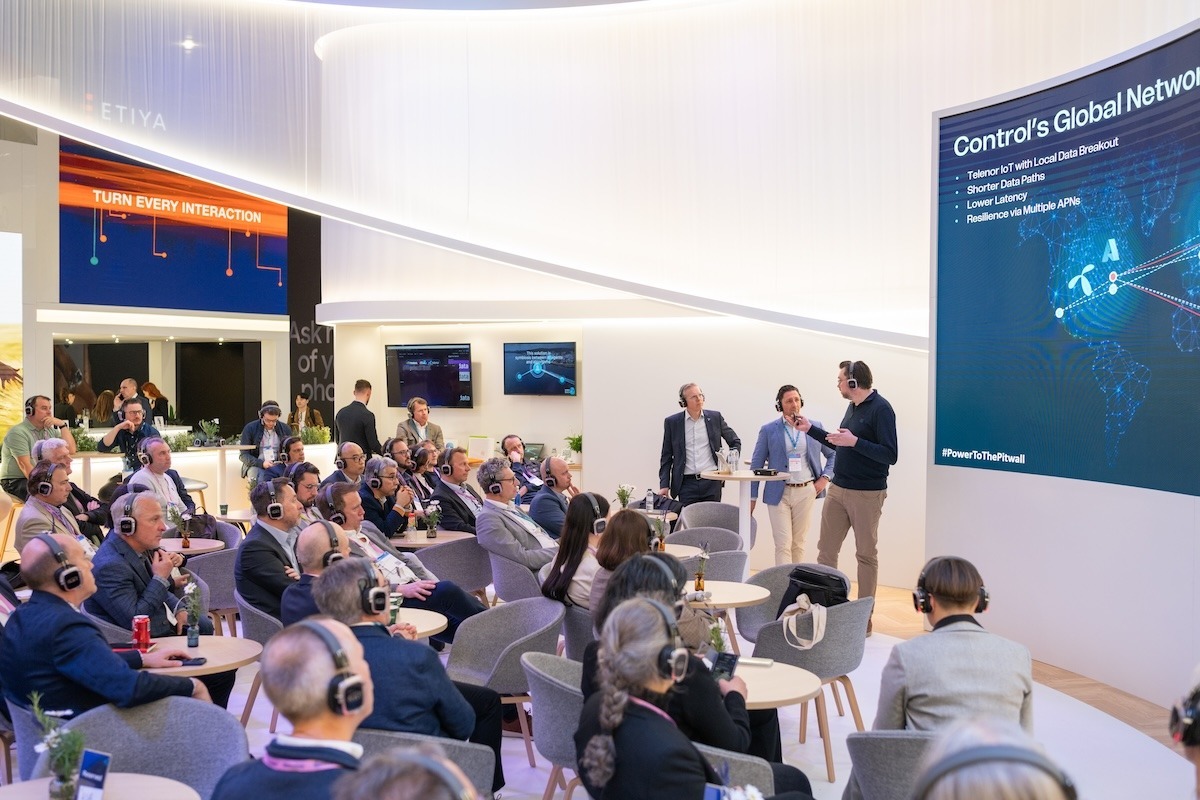
At the Telenor stand in Hall 2, 2J20, the discussion moved quickly from industry direction to practical execution. Hybrid connectivity came up repeatedly, especially what it takes to combine terrestrial and satellite coverage without adding unnecessary complexity.

A Telenor IoT customer case from Control Limited, presented by Nathan Sanders at the Telenor IoT Gathering, helped ground that discussion in real operating conditions.

VIDEO

Watch the MWC video summary

The shift to SGP.32 is one of the most disruptive technology changes in 2026. It's also something that is very visible here at the Congress this year."
Mats Lundquist CEO Telenor Connexion and Head of Telenor IoT

Automotive and Software-Defined Vehicles: A Clear Signal From MWC

If one part of MWC 2026 made the wider market shift easier to see, it was automotive.

Cars are increasingly being treated less as finished hardware products and more as connected, software-defined platforms. That changes the role of connectivity. It is no longer only about bringing a vehicle online. It becomes part of how services are delivered, how products evolve after launch, how data is exchanged, and how compliance and trust are maintained across long lifecycles.

That matters beyond automotive. It points to a broader change in connected products, where connectivity decisions increasingly shape how systems perform, adapt, and stay commercially useful over time.

Smart Mobility Summit: Connectivity Meets Autonomy

That theme also ran through Smart Mobility Summit: Connectivity Meets Autonomy, where Marie Högberg, Head of Automotive at Telenor IoT,  joined the discussion on how connectivity and intelligence are shaping adaptive mobility systems.

The session focused on how advanced connectivity, including 5G and cloud-native platforms, supports secure, low-latency data exchange between sensors, edge devices, and control systems. It also explored how the convergence of connectivity and intelligence is helping create more adaptive and resilient mobility ecosystems.

Watch the session on the official session page.

How Connectivity Architecture Is Changing Automotive

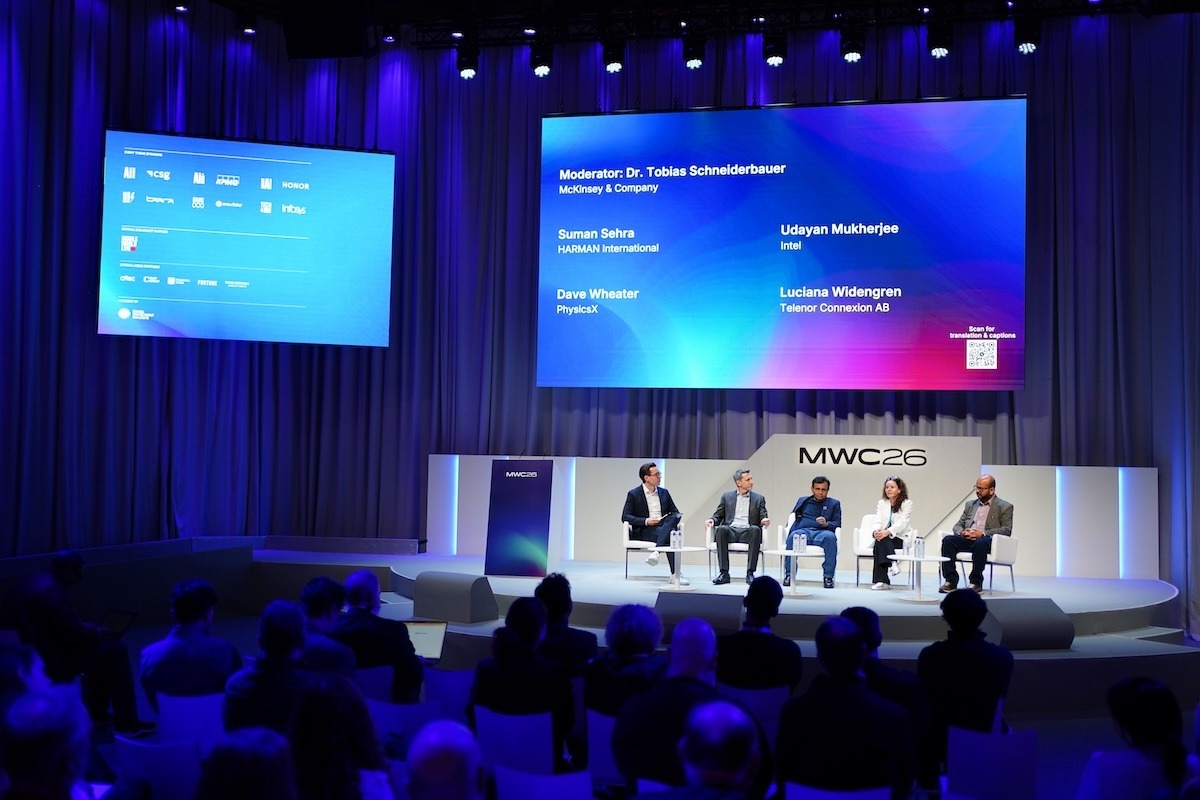
A second automotive signal came from The End of the Automobile as We Know It, where Luciana Widengren, Chief Legal Officer at Telenor IoT, joined industry leaders from McKinsey, HARMAN, Intel, and PhysicsX to discuss how connectivity architecture is reshaping automotive platforms.

VIDEO

Watch the MWC panel

Software-defined vehicles are turning cars into long-lived digital systems. Updates, connected services, and data-driven features are becoming part of the ownership experience. To support that shift, connectivity infrastructure has to evolve as well.

The discussion shows why OEMs can no longer treat connectivity as a narrow embedded feature. It increasingly shapes platform design, post-sale operations, regulatory exposure, and the ability to improve services over time.

Continue Exploring

Download the Key Takeaways PDF for a concise summary, or watch the webinar discussion with Telenor IoT and Analysys Mason for a broader view of the shifts shaping IoT after MWC 2026.

PDF Summary

Four Cellular IoT Shifts to Watch in 2026: Takeaways From MWC 2026

Explore four cellular IoT takeaways from MWC 2026, including 5G execution, SGP.32, satellite connectivity, and lifecycle security.

Access the Key Takeaways
Report

IoT Predictions 2026: The Era of Boundless Connectivity

From technical scarcity to the complexity of choice. Discover why IoT success in 2026 is no longer about “can we connect,” but how you orchestrate the next frontier of global IoT.

Download the report

Join Us for a Webinar

In this webinar on May 14 we discuss how Artificial Intelligence is transforming the IoT landscape.